










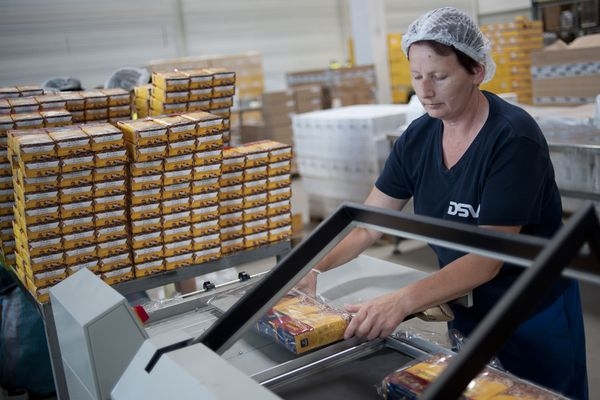
Experience, flexibility, and the ability to reduce costs are just a few of the challenges posed by the FMCG industry to a logistics operator. This market is estimated at over PLN 230 billion in Poland and represents a very attractive target group for companies specializing in contract logistics. So, how can one meet the requirements related to managing the distribution of fast-moving consumer goods?
A range of services as diverse as the industry itself
The vast variety of products and the volatility of volumes are the most characteristic features of the FMCG industry, which translate into the need to provide an equally wide range of services.
– The main expectations placed on a logistics operator can be defined as achieving unlimited flexibility while maintaining the highest possible quality and the lowest possible costs. Of course, such a set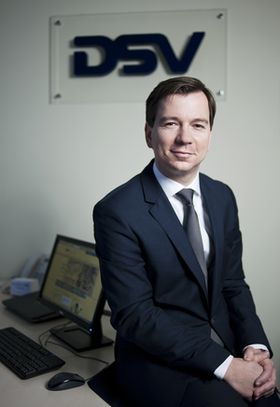 of ideal criteria is a challenge that requires a detailed analysis of the process and an attempt to reconcile often conflicting goals – says Maciej Walenda, CEO of DSV Solutions. – Thanks to constant cooperation with our clients, we manage to reach a rational compromise. Typical critical points include monthly volume volatility, irregular changes in order quantities related to sales activities, or unplanned return volumes from the e-commerce channel.
Always on standby
Economic fluctuations and the resulting volatility of needs are another challenge faced by logistics operators serving FMCG clients. And how does this look in practice?
– From the perspective of a logistics operator, economic fluctuations are visible through the observation of specific areas or product groups. During an economic slowdown, consumption naturally shifts to cheaper products, but globally, the turnover dynamics of our clients are consistently growing. At the same time, clients try to intensify marketing activities, generating much higher turnover in the area of value-added services. They do this in particular by creating promotional sets that boost sales, which in effect causes a shift in the scope of cooperation from regular handling to the area of value-added services. The key to success is therefore very close cooperation with clients and the exchange of information on forecasts, not only at the level of total turnover but also taking into account individual product groups or planned promotional campaigns – says Maciej Walenda. – The aforementioned volatility of needs is certainly a significant challenge. We are aware that as an operator, we are responsible for the image of our clients before their recipients. This means that we must plan our operations in such a way that the final recipient receives the goods on time and in accordance with the order.
Advanced management
Distribution systems for individual goods can differ significantly, but regardless of the specifics of the handled goods, in the case of fast-moving consumer goods, a logistics operator must always take into account the time criterion and the requirement for process automation.
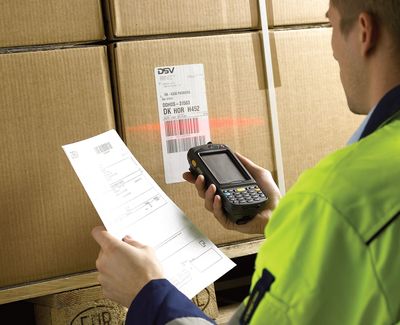
– The distribution system depends on the client’s needs and is adapted to the requirements of a specific project. We conduct a full process of monitoring the flow of goods down to the level of, for example, batch or expiration date. We must be able to withdraw goods in a very short time, in accordance with client requirements, and perform detailed sorting of assortments, including from such a demanding distribution channel as e-commerce – says the CEO of DSV Solutions. – As for automation, nowadays, logistics operations without the use of IT tools seem impossible. The requirements regarding data flow time and the level of their complexity are so high that any manual operation would automatically become a “bottleneck” of the entire process. At DSV Solutions, we are constantly working on improving our tools in such a way as to increase efficiency, response time, and transparency of the entire supply chain. The ability to efficiently identify products throughout the handling process is of great importance to us, which would be impossible to perform without effective IT tools.
 Competitive advantage
From the perspective of logistics operators, the FMCG industry is an extremely attractive market. Being well-prepared to meet client needs is one thing, but choosing the right partner to handle such an important area of business has its own rules. So, what else do clients pay attention to, and what guides them when making a decision regarding the choice of an operator?
– When looking for the ideal solution among the offers of logistics operators, it is worth paying attention to experience. Many years of active work on improving processes in serving many clients allow an operator to have a broad perspective and the ability to present proposals for solutions that will be able to guarantee high quality of service while eliminating potential risks. It is also worth getting to know the operator’s example case studies, which are proof of efficient process implementation, and familiarizing oneself with the experiences of other clients. Such references allow for a real assessment of the operator’s competence and the identification of a competitive advantage – says Maciej Walenda. – Another issue is the ability to cooperate closely and jointly look for savings. At every step of the process, areas for improvement can be identified, but for the most spectacular effects, close cooperation between the client and the operator is crucial. Obtaining benefits is the result of optimization activities by both parties. Open communication is extremely helpful for a mutual understanding of the complexity of the process and for developing a new, even more effective way of handling. Additionally, tools such as DMAIC analysis allow for the systematization of work and control of planned tasks in individual areas.