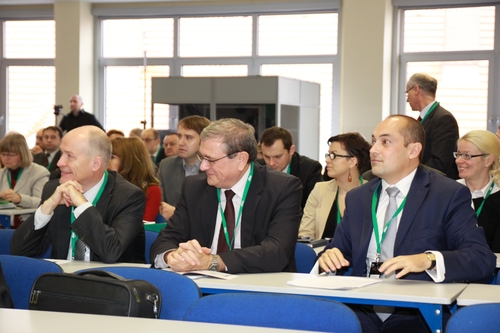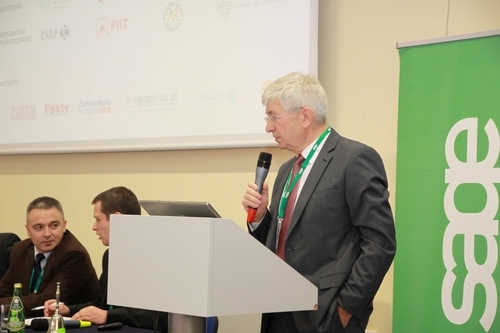
Last week, the two-day “e-Administration for Business” conference was held. Its organizer (the Institute of Logistics and Warehousing) aimed to create a platform for exchanging information about government development plans as well as the needs and problems of the business world in the area of e-administration. The conference was attended by over 200 representatives from the public administration and business sectors, including government officials, local authorities, and chambers of commerce.
– We managed to invite people to the conference who have a decisive voice in determining the direction of public administration development – said Dr. Grzegorz Szyszka, Director of the Institute of Logistics and Warehousing. – I hope that in this way we will be able to show you what the future of e-administration in Poland looks like.
However, for its future to stop looking bleak, the administration must be open to citizens, including entrepreneurs. It should provide information on ongoing cases, ensure functional e-services, and provide efficient contact through a so-called “one-stop shop”.
– Entrepreneurs expect transparent information on how to handle official matters in a short time and with minimal formalities – explains Andrzej Ręgowski from the Ministry of Administration and Digitization. – We already have some successes in this area, progress is visible, but the current state of administration computerization does not yet satisfy us. We must build a series of elementary services to use them in the future to handle more complex matters, which is what everyone expects.
Therefore, it is essential to understand the expectations of business and for the government to develop new, effective solutions that will set the directions for the development of the modern e-economy. The “e-Administration for Business” conference is intended to enable this, especially since an important point of the conference is the presentation of good practices, solutions, and implementations from the domestic market and foreign markets, as well as a joint debate between both invited communities.
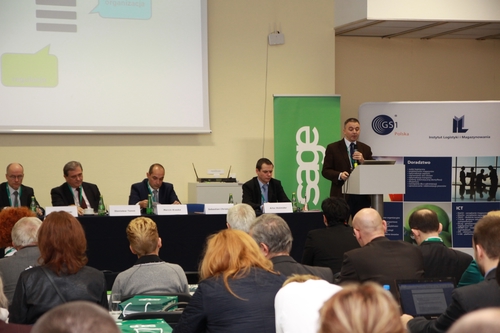 – We must learn to avoid bad solutions and follow good examples from home and abroad – adds Sebastian Christow from the Ministry of Economy. – We want e-administration to become citizen-friendly, to serve them and help in communication between public administration and the business world. The key to the further development of public e-services should be cooperation between administration and business, enabling the provision of services that meet the needs of entrepreneurs.
Good cooperation, which can bring the expected results, requires mutual learning, understanding the needs of individual environments, and the possibilities of meeting them. A change in thinking is necessary, moving from “stamp culture” to the widespread use of the benefits of the Internet. Participants of the “e-Administration for Business” conference discussed this on Thursday, the second day of the conference. This time, the main motto of the meeting was “let’s learn from the best!”, so from Thursday morning, there were presentations by representatives of public administration from Australia, Malta, Spain, Estonia, and Taiwan, who presented best practices in the field of office electronization.
The first to speak was Rebecca Greenwood, a representative of Tasmanian Government Organisations, who presented the government project “Business Tasmania”.
– This project provides a completely new perspective on e-services in terms of their accessibility and interaction between the business sphere and the three pillars of administration – community, state, and local – says Rebecca Greenwood. – The Business Tasmania project is an excellent example of using so-called Web 2.0: intelligent search functionality, social media channels, smart forms, and intuitive forms of contact.
The next speaker also emphasized the importance and necessity of cooperation between officials and entrepreneurs in creating an effective platform for electronic contact and service exchange.
– The development of e-government has always been a priority in our country – says Joseph Grech, manager of the “Business First” online platform from Malta (the platform is part of the Electronic Point of Single Contact network). – Over the last few years, we have made a significant effort to facilitate entrepreneurs’ access to public administration services electronically. Our single point of contact platform currently guarantees all (or almost all) online services related to conducting business activities.
It can be used not only by entrepreneurs who are already running their business but also by those who are just starting their adventure with business. The platform offers them, among other things, advanced support tools when creating a start-up.
Solutions introduced in Spain are equally effective. There, the level of accessibility of central administration services reaches 90%, and local administration 78%.
– For us, a high priority was to create online services that would be easily accessible to citizens, simple to use, and at the same time address the most important needs of residents – says Patrocinio Nieto Moreno from the Spanish Ministry of Finance and Public Administration. – Thanks to this approach, we received a United Nations award for the initiative of full citizen access to public services.
From the further part of this speech, however, it could be concluded that those responsible for the development of e-administration in Spain are not resting on their laurels but are already taking further steps aimed at reducing costs, facilitating access to services, and optimizing already available resources.
– We have a new strategic plan for e-government ready, we will implement it until 2015 – explains Patrocinio Nieto Moreno. – it includes, among other things, reducing bureaucracy and the gradual elimination of paper use, adapting existing services to the changing needs of citizens, and developing “open” administration and increasing the value of information coming out of the public sector through its reuse.
Even more presentations awaited the participants of the “e-Administration for Business” conference, including a very interesting speech by Joanna Jajus from the Poznań City Hall, who presented good practices from our own backyard, as well as lectures by guests from Belgium, Germany, and the Netherlands. At the end of the conference, a workshop on design thinking in administration was held, led by experts from the Institute of Logistics and Warehousing – Jacek Pucher and Piotr Nowak.