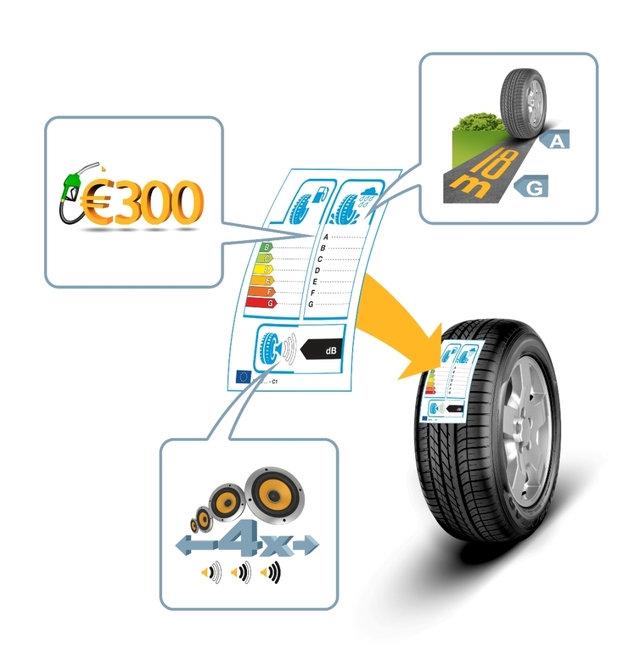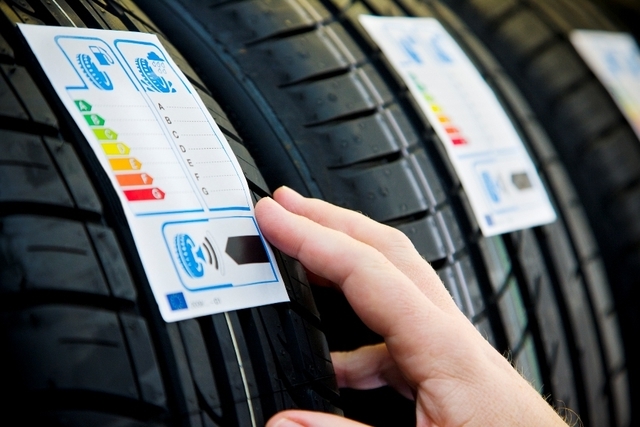
More than two-thirds of consumers who bought tires in 2013 took into account information from the EU tire label, according to a survey conducted on behalf of Goodyear Dunlop by IPSOS MarketQuest across six European markets. As many as 71% of tire buyers who were aware of the label used the information on its three parameters before making a choice. The data also showed that more than half (54%) of tire retailers in Europe use the label as a useful tool when selling tires. The research results were presented during a debate in Brussels summarizing the first year of the labeling system’s operation.
The EU tire labeling system is having an increasing impact on the purchasing decisions of European commercial vehicle fleets. The results of a survey conducted by MV2 Conseil on behalf of Goodyear Dunlop, covering approximately 500 fleets in France, Germany, Italy, Poland, and Spain, indicate the importance of the label. Just over half of the fleets (54%) stated that the label influences their tire choice, and two-thirds (66%) identified fuel efficiency as the most important parameter on the label.
As part of the debate organized in Brussels by Goodyear Dunlop, key stakeholders and industry experts were brought together to discuss the development of the labeling system on the first anniversary of its introduction. The EU label evaluates tires for passenger cars and trucks based on three criteria: rolling resistance, wet grip, and external noise level. The regulations regarding mandatory labeling came into effect in November 2012.
Malcolm Harbour, Member of the European Parliament and Chairman of the Committee on the Internal Market and Consumer Protection, who played a key role in implementing the EU tire labeling regulations, emphasized the importance of this tool in efforts to improve driver safety and environmental protection.
– The EU tire label was introduced as part of a large package of legal regulations regarding safety and environmental protection for passenger cars and trucks across Europe. Buying tires is a difficult choice for a consumer, which is why they need more transparent and impartial information. The knowledge provided to the consumer should be appropriately selected so as not to cause information chaos. That is why we focused on clear criteria that allow consumers to make choices based on reliable information – said M. Harbour. – I am pleased with the success of the new law, however, from the legislator’s point of view, we need more time to fully assess its impact on environmental protection and safety. The analysis of the regulations will be conducted again in 2016.
Research commissioned by Goodyear Dunlop shows that for passenger cars, the most important criterion for consumers is wet grip – 52% of respondents indicate this parameter as the most important of the three included on the label and taken into account when making a tire purchase decision. Fuel efficiency, which results from reduced rolling resistance, was important for 47% of consumers, and external noise level for 41%.
A recording of the debate can be viewed at: www.thetirelabel.com.