








The article presents a comparative analysis of reverse logistics systems based on the example of: an urban municipality, an urban-rural municipality, and a rural municipality. It compares the basic tasks of municipalities in their areas of responsibility. Special emphasis is placed on the possibility of applying sustainable logistics in the aspect of practical implementation of reverse logistics systems within macrologistic systems created by local governments at the municipal level. Particular attention is paid to the concept of reverse logistics as an essential element of a municipality’s macrologistic system.
The study constitutes, in its theoretical part, an attempt to systematize basic concepts regarding reverse logistics from a macrologistic perspective, and in its practical part – an attempt to link the most important data concerning waste management with certain phenomena occurring in real macrologistic systems at the municipal level.
The main goal of the article is to present the functioning of reverse logistics systems operating in macrosystems, with particular emphasis on demonstrating the benefits of their application, as well as a review of the state of reverse logistics systems currently operating based on the example of selected Lower Silesian municipalities.
The municipality as an example of a macrologistic system
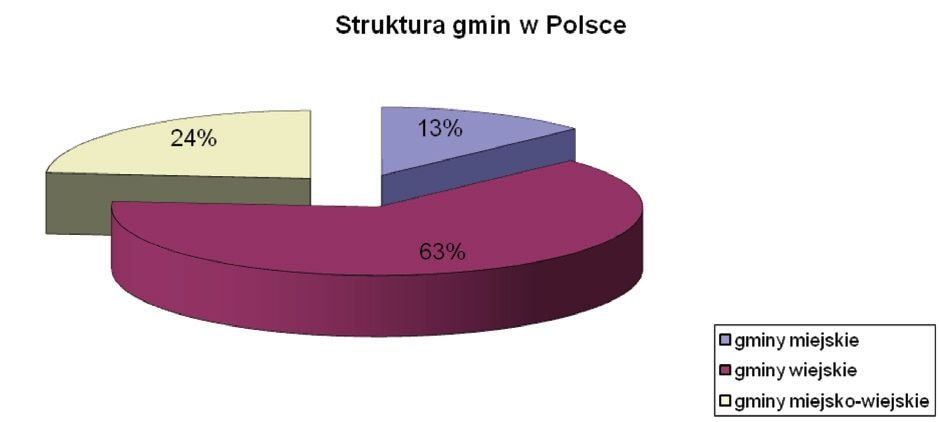
The reform of the country’s territorial division, which entered into force on January 1, 1999, fundamentally changed the spatial layout of the country. In accordance with the provisions of the Act of July 24, 1998, On the introduction of the fundamental three-tier territorial division of the state, new government-local government voivodeships and counties were created as units of the intermediate level of local government. The result of the changes in the act are also municipalities, which constitute the lowest level of local government. As of December 31, 2008, the system of the fundamental territorial division of the country consisted of 16 voivodeships, 314 counties, and 65 cities with county rights, as well as 2,478 municipalities (table 1). Municipalities are divided into three groups (figure 1): urban municipalities, rural municipalities, and urban-rural municipalities.
The article contains 12,450 characters.
Source: Logistyka Magazine 4/2012.