









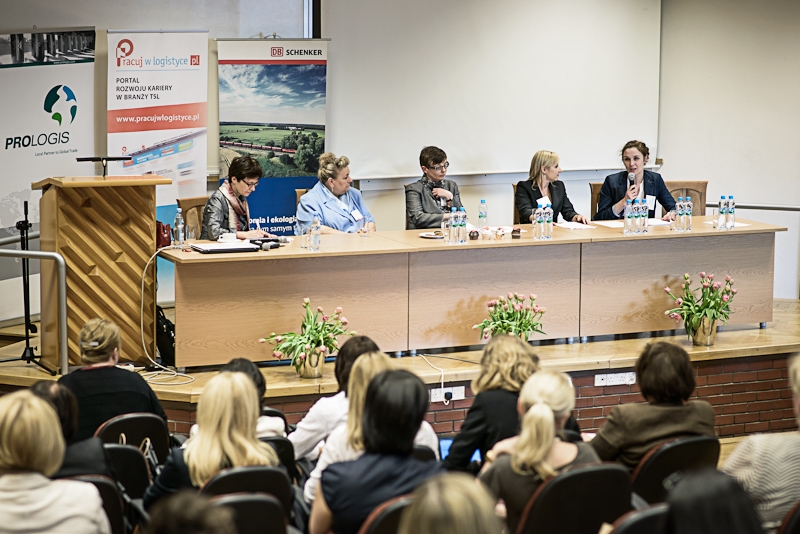
Business is about relationships – this is the summary of the 2nd Women in Logistics Forum, which took place on May 16th in Warsaw. The conference was organized by Beata Trochymiak, editor of the Pracujwlogistyce.pl portal. The meeting was dedicated to building relationships in logistics between suppliers and customers, as well as sales management in logistics and women’s mentoring.
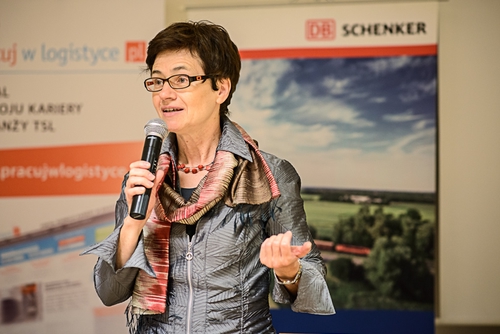 The conference was attended by 200 people, including management staff from TSL companies as well as retail, distribution, and manufacturing chains. In addition to speeches by prominent experts and substantive discussions, the conference featured panel discussions, networking exercises, and other interesting attractions and surprises, all held in a pleasant atmosphere created by the participants of the 2nd Women in Logistics Forum and the conference venue, IBIB PAN in Warsaw. The conference was hosted and moderated by Prof. Halina Brdulak from the Warsaw School of Economics (SGH), who opened the discussion and presentations that continued throughout the subsequent sessions. As she emphasized, referring to the meeting’s theme: Good relationships in cooperation with suppliers or recipients help reduce purchasing costs, introduce innovations in products or processes, increase company operational flexibility, and improve the competitive position of bidders competing for end customers. And the foundation for building a relationship effect is social capital.
Entrepreneurship and Management
The panelists included such distinguished experts as Andrzej J. Sajkiewicz from Ernst&Young – one of the world’s top management specialists and one of the most prominent Polish experts on the economies of Far Eastern countries. Mr. Sajkiewicz discussed contemporary management styles and their impact on the development and position of enterprises, using Japanese organizations as an example. This unique presentation received special applause, and immediately after, Ms. Monika Pachniak-Radzińska, Development Director at DB Schenker Logistics, presented a model of logistics enterprise management based on the EFQM excellence model.
Sales and Values 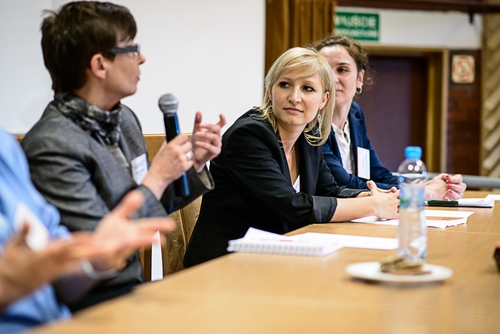 The second panel was devoted to sales management in logistics. The presentation by Dariusz Ambroziak and Mieszko Maj from the Karol Gauss Institute was sometimes confusing when questions and answers about values in sales were raised. The topic seems simple and trivial, but when asked how many values have been defined, no one among the participants guessed the answer, which is 17,000. How to find one’s way in this? How to speak the same language? What price do we pay for the lack of shared values? Experts from the K. Gauss Institute not only answered these questions but also pointed to another important issue related to values – employee anomie – a social phenomenon consisting of the systematic occurrence of behaviors among employees, or more often in employee groups, that lead the organization to measurable financial losses. As it turns out, the scale of anomie is enormous; as many as 78 percent of surveyed companies (a 2012 study by Employers of Poland) suffered due to the dishonest behavior of their employees. In the retail industry, employee theft in 2011 amounted to 551 million dollars. Total losses amounted to 1.67 billion dollars, which accounts for 33.5 percent of all losses. Another prominent expert who was a guest at the 2nd Women in Logistics Forum is Prof. Danuta Kisperska-Moroń from the University of Economics in Katowice, who specializes in supply chain management, logistics customer service, logistics strategy, and human factor management in logistics. Her speech referred to values and ethics in business, and the Professor approached this issue through the prism of Corporate Social Responsibility (CSR), using the example of the properties of supply chains as systemic goods.
– Sustainable development means achieving the organization’s goals within defined ecological constraints, without depriving future generations of the ability to meet their needs – said Prof. Danuta Kisperska-Moroń. However, she also warned against going to extremes in saturating supply chains with aspects of social balance, citing the consequences of such examples. What should characterize company actions in socially responsible supply chains is the empowerment and ability to present and enforce one’s own position by every link in the chain, a true partnership approach, and acceptance of different aspects of ethics characteristic of different organizational forms appearing in the supply chain.
Relationships and Transactions
An interesting and innovative presentation was given by representatives of the Prologis board, Marta Tęsiorowska and Bartosz Mierzwiak, who discussed the issues of “relationships” and “transactions.” Using real-life examples from Prologis, they described behaviors during negotiations depending on gender, national culture, habits, etc., and the impact of relationships on transactions when negotiating warehouse space lease agreements. They also noted that there is no golden rule for closing a transaction or making a sale, but what can be called one is the KZN – Complementary Negotiation Team, which is: well-coordinated; at a similar level of knowledge, experience, and skills; diverse in terms of gender, age, and personality profile; not too large to be effective; ensures a variety of solutions; provides a sense of security and comfort in the investment implementation process; and presents a broader spectrum and quickly adapts to the other party’s expectations. The presentations on business relationships were complemented by a networking lesson proposed by Karolina Gasińska, Managing Director of GO!Express & Logistics Poland, and a speech by Wanda Dobrowolska, head of WISTA Poland, who gave an example of business development based on networking. Irene Rosberg, Director of the Copenhagen Business School in Denmark, who was visiting Poland, arrived specifically for this panel and shared her experiences regarding networking and relationships.
Mentoring Not Only for Women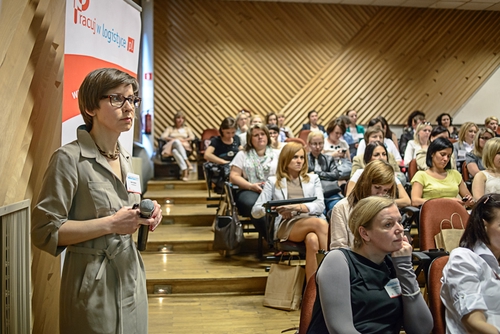 The culmination of the 2nd Women in Logistics Forum was a panel dedicated to mentoring in logistics and women’s mentoring. The panel was moderated by Ms. Agnieszka Bilińska, CEO of Vital Voices Poland, who invited one of the organization’s mentors, Ms. Aleksandra Gren, General Manager of Fiserv Poland, to give a presentation. It is worth explaining here what Vital Voices is – an international organization whose goal is to develop and discover the leadership potential of women through the idea of mentoring (10,000 women from 127 countries in Asia, Africa, America, and Europe have participated in mentoring programs). Vital Voices Poland also marked its presence in logistics – CEVA Logistics successfully implemented a mentoring program with the support of this organization, which was discussed during the panel by Ms. Anna Miga-Rubak, HR Director, Central Europe at CEVA Logistics. The entire panel was preceded by a speech on intergenerational relationships in logistics organizations, using the example of a mentor and mentee in logistics, two ladies: Beata Nawrocka, Branch Manager at ET Logistik in Bydgoszcz, and Magdalena Płoszajska, Development Manager at the Experimental Plant for Activated Carbon Production (formerly a manager at DHL Express).
At the end of the conference, the “Woman in Logistics 2012” statuette and title were awarded to Ms. Beata Krawczyk, Managing Director of H&S Transport and WIM Bosman/Mainfreight Poland. The entire meeting was crowned with a champagne toast and cake, as well as workshops on travels through India and Africa, led by Ewa Balazs from tylkoAfryka.pl.
The main partners of the 2nd Women in Logistics Forum were: Prologis and DB Schenker Logistics, and the group of Partners also included the companies: CEVA Logistics, SKYLogic, Consafe Logistics, as well as Millennium Leasing and Oceanic.