








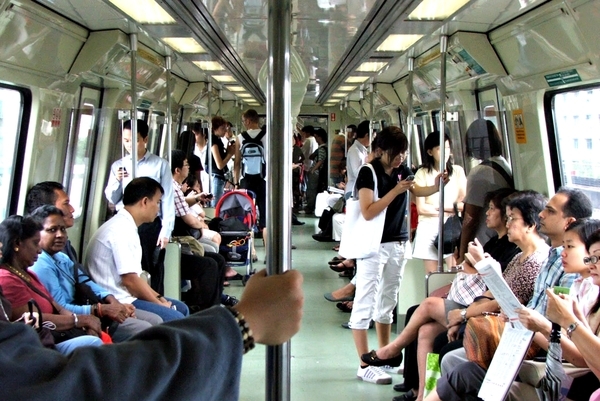
In line with global economic trends, metropolitan regions represent the most dynamically developing areas of the world economy. It is estimated that urban residents currently account for approximately 50% of the global population, with forecasts indicating an increase to 60% by 2030. As a result of these migrations, the rate of individual motorization in cities has increased significantly.
More and more cities are struggling with congestion that slows down urban traffic and, consequently, reduces the quality of life for residents. Therefore, there is a need to take action to improve the movement of people and goods in the city, following good practices and utilizing modern technological, organizational, and functional solutions. Stakeholders, who usually have different expectations, play a significant role in the city’s logistics system. Therefore, the purpose of this article is to present the role of stakeholders in the process of modeling urban logistics to improve the quality of life for residents.
Definitions of urban logistics and the city logistics system
The justified skepticism of decision-makers towards the concept of urban logistics is linked to the lack of established theoretical foundations, the most convincing evidence of which is the lack of consensus on the interpretation of key concepts. In the broadest sense, urban logistics is interpreted as all decisions and actions aimed at improving the efficiency and effectiveness of all types of flows of people, goods, and accompanying information, as well as utilities in urban areas in a so-called closed loop. This means that the concept of logistics goes beyond the issues of urban transport integration and largely overlaps with the problems of municipal management, including water and sewage management, electricity and heat supply, and waste management. On the other hand, among certain groups of scientists, including members of the global Institute for City Logistics based in Kyoto, separatist tendencies can be observed, which manifest themselves in narrowing the concept of urban logistics by focusing attention on the separate modeling of flows of people or goods in cities. It should be clearly stated that such a narrowing is contrary to the integrative nature of logistics management and reduces the idea of urban logistics to a fashionable slogan, within which traditional research and implementations in the field of urban transport are conducted.
In search of the proper interpretation of urban logistics concepts, one should reach for well-established and generally accepted definitions of business logistics that have existed for several decades. According to the definition developed by members of the Council of Logistics Management, according to which “logistics is the process of planning, implementing, and controlling the efficient, effective flow and storage of goods, services, and related information from point of origin to point of consumption for the purpose of conforming to customer requirements,” urban logistics can be defined as the planning, implementation, and monitoring of the economic efficiency and effectiveness of the flow of people, goods, and related information in urban areas in order to improve the quality of life of their residents.
Analogously, by referring to general systems theory, according to which every system is a purposefully organized set of elements and the relationships between them, the concept of a logistics system can be defined. With this in mind, the urban logistics system should be interpreted as a purposefully organized set of elements, such as: its stakeholders, infrastructure, regulatory standards, and tariff system, as well as the relationships between them, which are involved in the flows of people, goods, and their accompanying information in urban areas.
The article comes from the journal “Logistyka” 3/2012.