








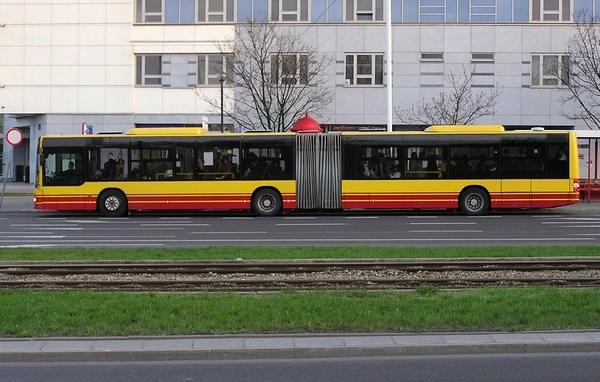
The organization and management of public transport in Warsaw is handled by the Public Transport Authority (ZTM). The mission of ZTM is to act for the benefit of passengers by increasing the comfort of their travel, developing the communication network, and introducing modern solutions and amenities.
ZTM also positively influences the development of Warsaw by regulating passenger flows, developing infrastructure, and trying to encourage residents to use public transport while limiting the use of private vehicles. All these actions are aimed at reducing congestion in Warsaw, passenger education, and environmental protection.
The actions taken by ZTM are in line with the strategy of the Capital City of Warsaw, in which the assumption of increasing the efficiency of the city’s transport system appeared in the transport policy objectives [Strategy 2010]. Additionally, the Sustainable Transport Development Plan for Warsaw set the following tasks: streamlining urban and suburban public transport and rationalizing the routes of public transport lines (route planning). It can be assumed that the above tasks and social benefits such as improving travel conditions and comfort (i.e., shortening travel time, increasing traffic flow, introducing modern rolling stock, improving waiting conditions at stops, introducing information systems) largely depend on the organization systems of public transport, including the operation of bus stops.
Bus stops are an element of public transport infrastructure and, according to one of many classifications, are divided into permanent stops and “on-demand” stops. The Public Transport Authority in Warsaw defines them as follows [Ordinance No. 32/2008]:
-
a permanent stop is a stop where stopping and service for the purpose of passenger exchange takes place in all courses provided for in the timetable;
-
an “on-demand” (conditional) stop is a stop where stopping and service for the purpose of passenger exchange takes place in selected courses, at the passenger’s request and after the passenger has signaled such a need.
In the Warsaw public transport network, the dominant type of stop is the permanent stop. However, previous research by the authors of the article shows that urban transport systems based on “on-demand” stops provide greater social and economic benefits [Zych 2012]. On the other hand, almost all stops in the Warsaw night bus network are optional. The purpose of this article is therefore to identify the factors determining the recognition of a bus stop as operating in “on-demand” mode, using the city of Warsaw as an example. (…)
The article contains 17,889 characters.
Source: Logistyka Magazine 6/2012
Organization of “on-demand” bus stops in Warsaw – PDF file for download