








Functions and tasks of warehouses in an enterprise
Increased competition in European markets has necessitated adaptation to the requirements set by customers, who often do not want to wait long for the product they have ordered. This forces (manufacturing) enterprises to hold stocks of finished goods or semi-finished products, which allow for the rapid production of goods intended for sale.
Trading companies are also forced to accumulate stocks, as this is the only way they can quickly fulfill customer orders. To store inventory, an enterprise needs a warehouse, which, depending on the size and type of activity, can be owned by the entity or rented by it.
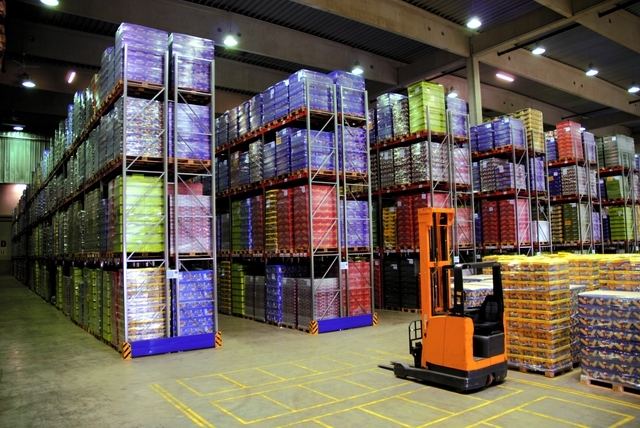
“A warehouse is a functional-organizational unit intended for storing material goods (inventory) in a designated space of a warehouse structure according to an established technology, equipped with appropriate technical means, and managed and operated by a team of people”.
Warehousing of finished goods is necessary for enterprises to ensure both continuity of sales and the storage of products that have not yet found a buyer. It often happens, however, that the latter remain in the warehouse longer than the business owners would like. This means that products lingering in warehouses may never find buyers, and their storage generates additional costs. However, in logistics operations, warehouses fulfill essential functions, which include:
- coordinating the volume of supply and demand, required during significant market fluctuations,
- the possibility of reducing transport costs by decreasing the frequency of deliveries while simultaneously increasing their size,
- supporting production processes by ensuring the continuity of supplying production with necessary raw materials and packaging, as well as the ongoing collection of finished goods,
- enriching marketing processes by accumulating stocks needed to create sets used in promotional campaigns.
For modern warehouses to fulfill the above functions, not only financial outlays are necessary, but also the coordination of tasks in the field of distribution logistics, which will allow for the proper preparation of storage spaces. (…)
The article contains 19,225 characters.
Source: Logistyka Magazine