








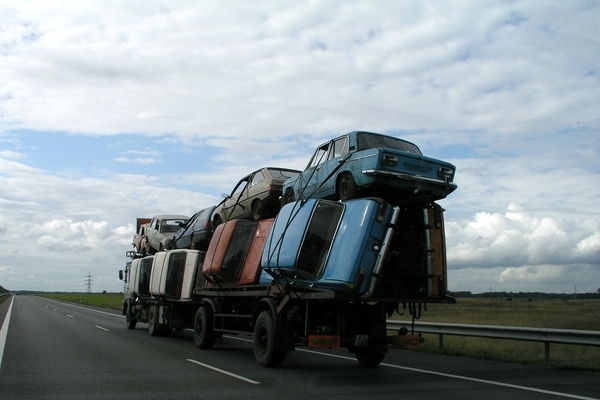
Over the last few decades, waste has become an increasingly noticeable problem and a threat to environmental protection. The visible increase in interest in waste management in Poland in recent years is the result of numerous interrelated activities. Significant progress can be noted, among other things, in the development of technologies that reduce the amount of waste produced, as well as technologies directly related to the disposal and recycling of waste.
An ongoing process, the goal of which is to ensure economic development, is the improvement and implementation of effective management and economic impact methods. These methods are introduced into all areas related to production and consumer activity, with particular emphasis on environmental conditions and factors that have a significant impact on the environment in which humans live. A large group of these factors includes the logistical functioning of an integrated waste management system. The relationships between the constituent elements of the system are implemented through the flow of waste material streams (solid, liquid, gaseous), as well as information and decision-making flows. The operation of an integrated waste management system depends, among other things, on:
- the properties, quantity, and distribution of waste in a given area,
- the standard of environmental protection service,
- spatial and urban planning factors, which are related to, among other things, the structure of the settlement network of a given region, the terrain of the area, the spatial structure of economic activity, the possibility of locating system facilities, and communication connections,
- general and local standards and requirements related to permissible loads on environmental elements.
These activities, defined in descriptive or parametric form, are considered input data for the system, as well as a package of its external barriers and conditions. The second group consists of internal conditions, which are closely related to the level of technology in the field of implementing waste transport, storage, and processing processes.
The basic factors that influence the efficiency of the system’s operation can be considered to be:
- the way in which waste is collected,
- the technological selection, location, and size of facilities,
- the effectiveness of facility operations,
- the selection of transport routes and the means of transport used for this purpose.
The system scheme can be a static system, meaning it considers the description of the system only for a specific point in time. Another option is one in which the model is dynamic. (…)
The article contains 22,848 characters.
Source: Logistyka Magazine
Keywords: logistics, waste management – PDF file for download