








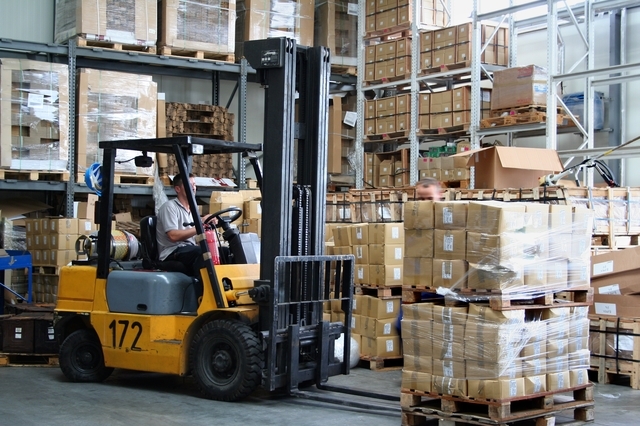
One of the activities in the transport process is the proper preparation of cargo for shipment. If transport is carried out using pallets, the preparatory activities are referred to as – forming a palletized load unit.
The main objectives of proper load unit formation include:
- ensuring rational use of auxiliary transport equipment (e.g., pallets),
- ensuring rational use of loading machinery and equipment,
- ensuring rational use of transport cargo space,
- ensuring rational use of warehouse space,
- improving the transportability of the cargo.
These goals are achieved, among other things, by standardizing the transport form of cargo – as a result of using standardized packaging and load units. Packaging, within the meaning of the Act “On packaging and packaging waste,” refers to products placed on the market intended for the storage, protection, transport, delivery, or presentation of any products, from raw materials to processed goods. Packaging includes the following categories:
- unit packaging, used to transfer the product to the user at the point of purchase, including single-use tableware intended for the consumption of products;
- collective packaging, containing a multiple of unit packages of products, regardless of whether they are transferred to the user or serve to supply points of sale, and which can be removed from the product without affecting its characteristics;
- transport packaging, used for the transport of products in unit or collective packaging in order to prevent damage, excluding containers for road, rail, water, or air transport.
Transport packaging is formed into load units. A load unit is a specific quantity of cargo assembled into a single whole, using auxiliary binding agents or transport equipment, in a way that ensures the durability of its shape, dimensions, and contents from the place of assembly through the entire transport chain until the moment of disassembly, enabling full mechanization of transshipment along its route, while maintaining health and safety conditions during transport, transshipment, and storage. (…)
The article contains 16,680 characters.
Source: Logistyka Magazine