








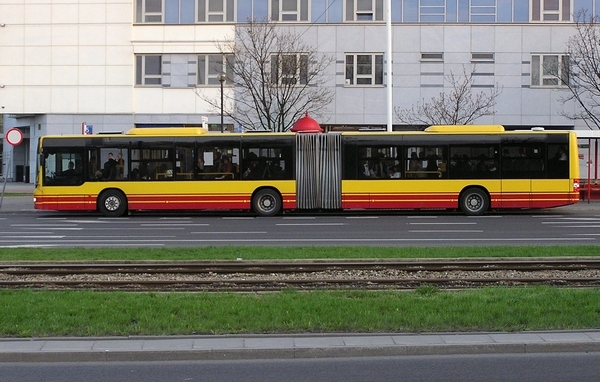
The subject of urban logistics research includes issues related to the purposefully organized and integrated flow of goods and material streams, people, and information within an urban agglomeration. These problems include, among others: the issue of urban transport accessibility, supply of commercial facilities, water and energy supply, sewage disposal, waste removal and disposal, construction and maintenance of telecommunications networks, and care for the natural environment.
Contemporary tasks of urban logistics include, among others, ensuring the appropriate distribution of specific, regular, previously uncoordinated and scattered transport streams passing through the city. The basic tasks of urban logistics in the area of transport are presented in Table 1. These mainly include: simultaneous elimination of errors in flow control, elimination of unnecessary (empty) runs, reduction of inventory, adaptation to the increasing requirements set by customers, and ensuring the environmental friendliness of processes. Such organization of transport of goods and services should best coordinate the logistics streams flowing into cities, within their area, and exiting the urban center.
One of the most important goals is the consolidation of transport streams, combining economic entities and institutions that have a movement aspect and operate within the city into a single, controllable entity, as well as managing this network of events in a way that ensures the desired level of quality of life and management in the city at a minimum cost level, taking into account ecological requirements. Coordination also includes the appropriate organization of municipal services provided to economic entities and the population. Another important goal is the reorganization of intra-city relations in such a way as to achieve a stable balance between space and the transport operating within it. This can be achieved through appropriate planning, organizing, and managing. Integration processes go beyond simple chain structures. New cooperative systems are emerging, which are new challenges for logistics in terms of flow management, including the flow of people and cargo in cities. Extensive cooperative systems cause logistics chains to transform into logistics networks. Large cities or urban agglomerations can be the equivalent of this. Dependencies in logistics networks can be operational or strategic, and the network itself can have a different territorial scope. Managing the structure of cities in a network system requires significant logistics competencies. The experience gained in managing complex logistics chains can be transferred to other areas of human activity. (…)
The article contains 29,776 characters.
Source: Logistyka Magazine
Solutions for improving the urban transport system – PDF file for download