








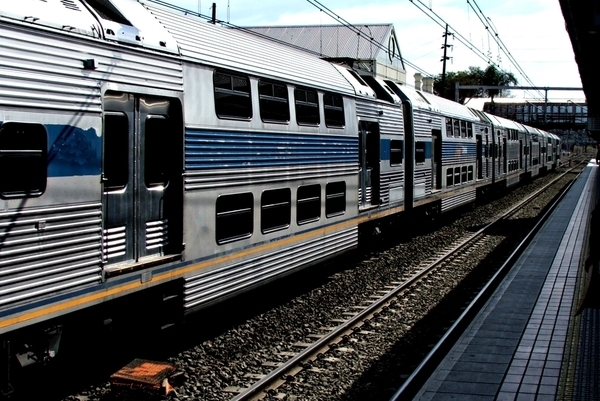
The costs of train delays incurred by railway customers were previously little noticed or taken into account by the railway itself. This applies to both passenger and freight train delays. This situation has changed due to the entry into force of the provisions of Regulation (EC) No 1371/2007 of the European Parliament and of the Council of 23 October 2007 on rail passengers’ rights and obligations, the subsequent provisions of which began to apply from 1 July 2011.
This concerns Article 17, which provides persons using the services of railway undertakings with financial compensation in the event of train delays. The consequences of Intercity train delays are no longer borne solely by railway customers, but also affect the carrier itself.
Estimating the costs of passenger train delays
Costs not reimbursed by the carrier
The value of one minute of delay corresponds to the losses incurred by the parties involved in the transport process compared to a situation where such a delay would not occur. Of course, the value of this unit loss may also depend on the value of the delay itself. Small delays (on the order of a few minutes) usually do not cause serious economic consequences in the form of missing delivery deadlines or missed connections at hub stations. Such small delays can be easily mitigated by using shortened travel times or shortened dwell times for the delayed train. Larger delays can cause serious consequences. For passengers, this may mean missing connections, thus significantly extending travel times. For goods, it may result in exceeding the delivery deadline, thus necessitating the payment of contractual penalties or the loss of credibility as a supplier. In our conditions, it is important to at least roughly estimate the value of one minute of delay for a train of a given category. To this end, the author applied the substitution method discussed in work [1]. In passenger traffic, this method assumes that the time lost to delays has a value equal to the value of earnings that could have been obtained by the passenger during that time, or, if the passenger did not intend to use that time for gainful activity, it represents the value of leisure time as assessed by them, which the passenger has lost.
In the case of freight traffic, goods reach the recipient with a delay, so in order to maintain production continuity, they must have warehouse reserves, the maintenance of which costs money. For the infrastructure manager, the delay of one train can lead to the delay of other trains, disrupt the turnover of rolling stock, the work plan of conductor and traction crews, and thus cause further losses. In order to stop the propagation of delays, the dispatcher making decisions regarding traffic regulation must follow the appropriate instruction (Ir-1), which states that delayed trains should be dispatched in such a way that trains running on schedule do not experience delays. The previous instruction R-1 also contained a provision that collisions (conflicts) between trains should be resolved in accordance with priorities (degrees of precedence) assigned to individual trains. Instruction R-1 also formulated an important exception to this rule: “… one may deviate from this principle (…), when a slight and harmless delay of higher-priority trains contributes to a significant reduction in the delays of lower-priority trains”. In order for a dispatcher or the computer system supporting them to be able to minimize train delays, they must have the ability to apply this principle, which is why its restoration should be considered. (…)
The article contains 22,210 characters.
Source: Logistyka Magazine
Minimizing costs associated with train delays in railway network areas – PDF file for download