









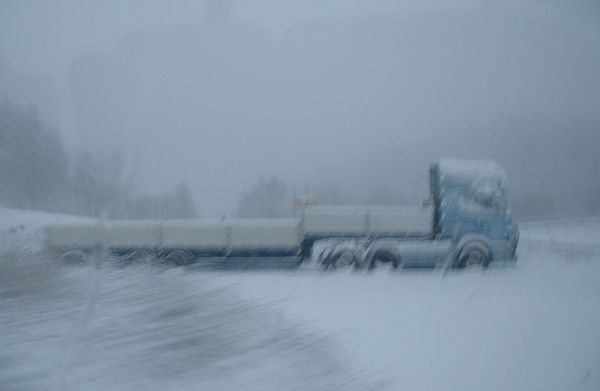
With the arrival of the autumn-winter season, Norwegian media are increasingly reporting on carriers from Eastern Europe who are surprised by winter conditions in Scandinavia. It turns out that the dire conditions on Polish roads during the winter period are not enough to prepare drivers for what they will encounter on northern routes.
– For several years, we have observed growing interest from Polish carriers in the Scandinavian market. This is due, among other things, to road tolls consistently implemented by Western European countries that favor vehicles with high emission standards. In Nordic countries, such differentiation does not yet exist. Therefore, vehicles from carriers who often cannot afford to maintain their fleet in proper condition, but for whom freight rates in this market seem attractive, appear on these routes. This is particularly visible in the summer period, when a large number of new carriers from Eastern Europe – especially from Poland and Lithuania – appear on local roads. However, they often do not take into account the fact that with the arrival of autumn, road conditions change significantly, and fleet maintenance, especially in the winter period, requires special preparation – says Piotr Nowak, Regional Director at DSV Road Sp. z o.o.
In recent days, authorities in Sweden have also decided to introduce a requirement for all vehicles with a GVW of over 3.5 tons to be equipped with winter tires on drive axles during the winter period. This should improve transport safety, but for those carriers who used all-season tires, it obviously means another expense of several thousand zlotys per vehicle. Unfortunately, winter tires and chains are often not enough; proper technical preparation of vehicles and training for drivers, for whom winding, snow-covered mountain routes pose a significant challenge, are also necessary.
– Additionally, besides the costs of preparing the drivers themselves and the vehicles, it is also necessary to include higher fuel costs, which less experienced carriers do not take into account. Another unpleasant surprise may be the costs of roadside assistance for heavy vehicles, which can reach several thousand zlotys. For a carrier or operator who does not have a signed contract with a local company offering such services, this means the necessity of paying in cash or risks having the vehicle detained until the payment is settled – explains Piotr Nowak. – Not everyone is also aware that the Norwegian traffic police rigorously check the state of preparation of heavy goods vehicles for winter conditions. If a police officer decides that the condition of the vehicle is not suitable for the prevailing conditions, they can not only issue a fine but also detain the vehicle until the equipment is supplemented – with winter tires or chains. In such situations, the carrier must reckon not only with additional costs caused by an poorly prepared fleet but also with claims from the operator’s clients due to the resulting delays.
DSV Road has been intensively developing transport between Poland and Scandinavia for years. Thanks to many years of experience, an established position in this market, and close cooperation between branches in Poland and Scandinavian countries, we are able to properly secure transport capabilities regardless of the season. It is essential that an operator working in such regions cooperates with a group of selected carriers who possess both the appropriate equipment and experience. It is the logistics company’s responsibility to ensure the best possible working conditions, e.g., the possibility of cashless purchase of high-quality fuel on preferential terms and support from companies specializing in providing roadside assistance.