










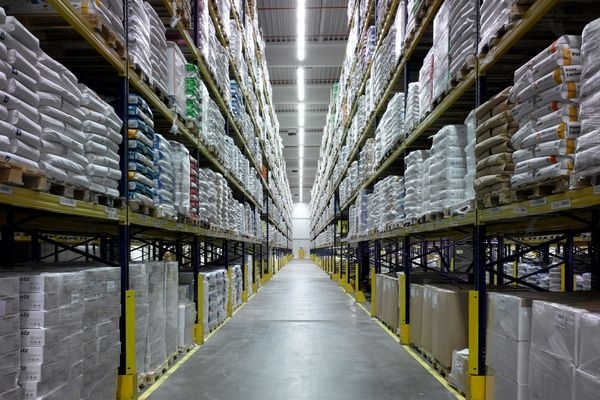
In Ploiesti, near Bucharest in Romania, Dachser has opened a warehouse for the storage of hazardous materials. The warehouse has an area of approximately 6,500 square meters, designed to store 11,500 pallets. The internationally operating logistics provider has invested over 10 million euros in this facility.
The warehouse can store hazardous materials of hazard classes: 2, 3, 4.1, 6.1, 8, and 10-13. These include gases, flammable liquids, flammable solids, toxic substances, and corrosive substances.
– The facility in Ploiesti is a very important project in the development of our European network – assesses Grzegorz Lichocik, President of Dachser in Poland. – This facility sets new safety and quality standards for the logistics industry.
Safety first
The warehouse is divided into six fire protection zones, separated by fire walls and fire doors. Sprinklers are installed at every storage level. It is equipped with fire alarm systems and sensors for flammable and toxic volatile substances. The warehouse floor is resistant to water, oil, and chemicals.
Dachser stores double the amount of fire-fighting water required by law in Ploiesti. When the temperature drops below zero, the tanks are heated. Two special concrete blocks protect against contamination by fire-fighting water or other liquids that could leak into the ground. The high-bay racking is designed to withstand tremors of up to 8 on the Richter scale. They feature additional reinforcements and twice the amount of steel than standard. This is a unique solution on the warehouse market.
Rules for storage and transport of hazardous materials
The Dachser warehouse in Ploiesti complies with the EU Seveso II Directive regarding the prevention of major industrial accidents involving hazardous substances. The regulations of the Seveso II Directive are intended to prevent such incidents. They are applied in most industrial plants, including those in Poland.
Legal requirements regarding the road transport of hazardous goods and cargo are defined by the international ADR convention, ratified by Poland in 1975, and currently in force in 46 countries.