










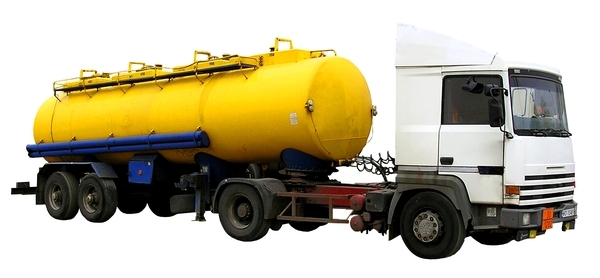
The current situation in the liquid fuel market in Poland, and in particular the retail fuel station sector, indicates through benchmarking that it is not enough to compete solely on the price of the fuels offered. Fuel companies, aware that if they want to compete, they must focus on broader activities, which primarily include improving the quality of the entire process.
The intended end result of these activities is product quality. With this in mind, a project was launched to implement the COP system as an innovative solution, under the patronage of POPIHN, which brings together domestic and foreign companies. The main premise for applying this innovation is the micro and macro mixing of different types of liquid fuels that occurs during loading/unloading in road tankers. It should be explained how these mixtures are identified. Micro-mixing refers to a situation where, during bottom loading, a different type of fuel (e.g., gasoline) begins to be loaded into the residues of one type of fuel (e.g., diesel) left in the compartment. On the other hand, if diesel fuel is unloaded (this type occurs most frequently) from a tanker compartment into a station tank with a product described as unleaded gasoline, as a result of the driver incorrectly connecting the product hoses in a full unloading system (here we mean mixing from several dozen to several tens of thousands of liters), we treat this as macro-mixing. Unfortunately, due to the diversification of the share of entities in the retail trade of liquid fuels in Poland, there is currently no single mandatory reporting system for all mixtures, so as to have complete knowledge of the scale of the problem and whether the values of the generated mixtures are progressing or regressing. Figure 2 shows two separate registers of mixtures in the years 2009 – 2010 and the first two quarters of 2011.
The first register (A) is maintained by a carrier providing liquid fuel transport services for several fuel companies, while register B is maintained by one of the companies for which several carriers carry out liquid fuel transport orders. It can be assumed that analogous registers of mixtures are maintained by all domestic and foreign companies and all carriers carrying out transport for domestic and foreign companies. Comparing or rather looking for a common denominator for both of these graphs, it can be stated that annually a company registers from several to a dozen or so product mixtures, and a carrier serving several companies, possessing about 50 transport units (tankers and road tankers), also registers from several to a dozen or so mixtures over the course of one year.
All mixtures (those recorded by the aforementioned links participating in the liquid fuel transport logistics chain) are caused by the following factors:
-
human factor (e.g., driver predispositions, level of training),
-
technical factor (type of transport means, condition and level of technical solutions used),
-
procedural factor (transparency of procedures applied to the process).
The above components can individually or collectively lead to fuel mixing.
The article comes from the magazine “Logistyka” 6/2011.