










Safe e-Store 2012 Post-Competition Report
Online stores are increasingly fulfilling their information obligations towards customers, yet they still have some work to do. The latest study conducted by the Institute of Logistics and Warehousing in connection with the Safe e-Store Competition shows that over 66% of stores make mistakes in informing consumers about the right to withdraw from a distance purchase, and over 7% do not provide any information at all about this fundamental right granted to e-customers.

Unfortunately, a significant portion of stores still has a problem with proper personal data protection. 74% of online stores surveyed in 2012 do not have an SSL certificate guaranteeing data encryption during transmission over the Internet.
3, 5, 8, 11, 13, 16, 17 – these are by no means numbers tipped in the Lotto – these are the values of online sales in Poland in the years 2005-2011, expressed in billions of zlotys. As you can see, our e-commerce is developing steadily. Moreover, Poland has been the leader in Europe for two years in terms of the growth of this market. In 2011, it amounted to 24% and was almost 8% higher than the European average.
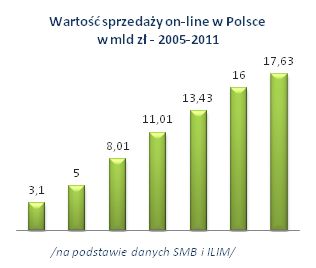
On one hand, we have large year-on-year growth, but on the other, the share of e-commerce in total retail sales is only 3%. This indicator places us at the end of the EU countries and leaves much to be made up compared to the leaders – Great Britain (12%), Germany (9%), or France (7.3%). The distance is decreasing every year, and many institutions and organizations are making efforts to ensure this happens even faster.
Such initiatives include the Safe e-Store Competition organized by the Institute of Logistics and Warehousing (ILIM) in cooperation with the Ministry of Economy. The goal of the Competition is to draw the attention of online stores, as well as the entire e-commerce environment, to issues related to the knowledge and respect for consumer rights in daily operations.
The Institute of Logistics and Warehousing, together with the Competition partner, Unizeto Technologies, conducted a detailed analysis on two groups of Competition participants. 191 out of 464 stores registered for the 2nd edition of the Competition were subjected to a formal-legal analysis. In these stores, the correctness of the provisions required in the terms and conditions and the way the shopping cart is handled were thoroughly checked. In a larger group of 450 stores, the level of personal data protection was examined.
A significant part of the stores does not provide all the information about themselves required by law: 28.7% do not inform about the body that registered the business, and 16.7% about the number under which it was registered. It is worth noting that there is a significant improvement here compared to 2009, when the Federation of Consumers presented a Report on the results of monitoring online stores. The Federation’s research showed that as many as 61% of stores did not inform about the body, and 40% about the number under which the business was registered.
The ILIM study shows that e-stores are doing very well with information that is of a marketing nature. 95% of stores inform customers about all components of the price, payment methods, or costs, deadlines, and methods of delivering the ordered goods.
Stores perform much worse in the study related to the right to withdraw from a distance purchase. As many as 66.5% of stores have errors in the provisions informing about this right. The most common error is a provision stating that the customer should return the goods within 10 days of receiving the order, while this is the deadline provided for informing about the withdrawal, and the return should take place within 14 days of the withdrawal.
Unfortunately, the proper protection of personal data remains a major problem for Polish e-stores. The analysis of the level of personal data protection was carried out by Unizeto Technologies SA, and it shows that as many as 74% of the surveyed stores (450) do not have an SSL Certificate. Therefore, the personal data collected by these stores are not properly secured, making them vulnerable to theft. However, an improvement is visible, because last year 82% of stores participating in the Safe e-Store Competition did not have an SSL.
More analyses related to the conducted research can be found in the Safe e-Store Post-Competition Report published on July 30, 2012, on the website https://bezpiecznyesklep.pl/raport.