










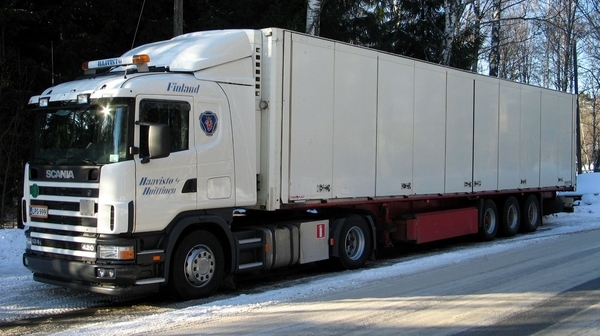
Transporting perishable food is a challenging task for a carrier. Changes in conditions during transport and defects in the body construction can lead to a significant decrease in the quality of the transported cargo and pose a threat to consumer safety. Food losses caused by improper conditions during transport reach 30%, which translates into enormous financial losses. The amount of food transported by road worldwide reaches 162 million tons annually. It is estimated that half of this requires transport in controlled temperatures. In Poland, there are approximately 60,000 isothermal, refrigerated, and freezer vehicles registered.
The regulations contained in the ATP agreement allow for mitigating these risks by defining the conditions for the transport of food products and the requirements for body inspections. The ATP agreement specifies maximum temperatures during the transport of chilled and frozen (including deep-frozen) food products, the classification of vehicles for food transport, and the methods for testing and marking these vehicles.
The ATP agreement, in force since 1970, was signed in Poland in 1984 and published in the Journal of Laws of that year, in the annex to No. 49. Since then, despite many updates, newer versions have not been published in Poland.
Temperature conditions during the transport of food products
Chilled products.
Certain groups of food products require the use of reduced temperatures during transport to inhibit adverse quality changes. Table 1 presents the temperature conditions for the transport of chilled food, contained in the latest version of the ATP agreement from January 2, 2011.
The current version of the ATP agreement provides for a revised classification of products. Previously, a maximum temperature of +4°C was adopted for game. The current version assumes a division of game depending on the origin of the meat. Thus, for meat obtained from large game, a transport temperature of +7°C has been adopted, which is the same as for other types of red meat. It is recommended to transport game from smaller animals at a maximum temperature of +4°C – just like poultry and rabbits. The recommended maximum transport temperature for raw milk has also been changed, increasing it by 2°C compared to the previous version of the agreement (currently +6°C for raw milk). In turn, pasteurized milk, meat products, fresh dairy products, cooked and ready-to-eat products, as well as raw vegetables suitable for direct consumption and fish products not mentioned elsewhere, should be transported at a temperature of +6°C or as specified on the label and/or in the transport documents. The previous classification lacked items such as fish products or raw and ready-to-eat vegetables. This is due to the development of food technology and changes in dietary habits. A “minced meat” category has also been introduced, for which a maximum temperature of +2°C or as indicated on the label and/or transport documents has been adopted. The new version of the agreement also includes a clause regarding the transport of raw milk, allowing a temperature increase to +10°C provided that the milk is collected from the farm for immediate processing. This group of food items does not include butter, which is discussed in the new version of the agreement in the annex concerning the transport of frozen products.
The article comes from the magazine “Logistyka” 5/2011.