










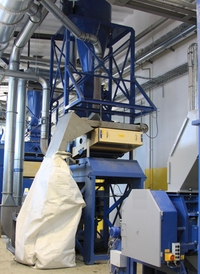
– The interest from companies whose business activities result in used tires is very high. We have received exclusively positive feedback regarding our offer, and some of our clients, who have their tires retreaded with us if they are suitable for further use, have welcomed the opportunity to hand over rubber scrap into reliable hands. Regulations preventing environmental pollution and the responsibility of entrepreneurs work in favor of ecological solutions – says Piotr Mądzielewski, President of ATB Truck.
The technology used by ATB Truck allows for obtaining high-quality granulates of any grain size during the tire disposal process. The purity of the raw material, as truck tires do not contain textiles, further enhances the quality assessment of the entire process and the technology applied. According to experts, the product derived from truck tires processed in this way will have an increasing number of applications. The “third” life of a tire is not a future concept, but a fact. Rubber products are made from granulates, and they are used in mixtures applied in the production of high-quality road surfaces and sports fields. They are also used in individual construction, e.g., in the construction of playgrounds and sidewalks. Due to rising prices of raw materials for rubber compound production, some tire manufacturers have already developed technologies allowing the use of high-quality granulates for the production of new tires. The investment carried out by ATB Truck is worth 13.6 million PLN, of which 30% comes from a grant awarded to the company by the National Fund for Environmental Protection and Water Management, 50% from a loan from the Bank of Environmental Protection, and the remaining 20% is the company’s own contribution.