










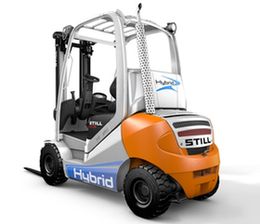
Although the use of hybrid technology is most widely known in passenger cars, it finds its greatest application in public transport and utility vehicles. The main reason is the high frequency of use, and thus significant cost savings. Another area where modern technologies using renewable energy sources and reducing fuel consumption and CO2 emissions are being implemented is logistics. Hybrid drive is only taking its first steps in powering forklifts, yet it is already sparking numerous comments and forecasts. According to skeptics, the costs are too high relative to the benefits obtained, and the technology itself will soon be replaced by newer solutions. Optimists, on the other hand, claim that the era of hybrids in logistics has arrived. What is the reality?
Innovation potential
Hybrid technology involves using two types of engines to power vehicles: an electric one together with an internal combustion one. During braking, energy is recovered, which is then stored in a special battery and released when starting again. Such a mechanism is particularly efficient in the case of forklifts, which by design constantly stop and start during the transport of goods. The dynamic driving style and short operating time at high energy levels during starting and lifting goods make the use of hybrid technology in forklift production profitable. The system allows for fuel savings of around 15% (compared to a standard solution), and another advantage is higher efficiency and lower exhaust emissions. Contrary to some opinions, the costs of implementing the drive in a warehouse pay off very quickly. Manufacturers estimate that with the forklift being used for 1,500 hours per year, this happens before the end of two years.
A step forward
Prototypes of the first applications of hybrid technology have been known for a long time, and according to the manufacturers’ promises, it did not end at the idea stage. In May of this year, at the CeMAT trade fair in Hanover, the official premiere of the first mass-produced RX70 Hybrid forklift from STILL took place. According to Borys Wochna, CEO of STILL Polska, this event started a new era in the history of intralogistics. Protecting the natural environment and minimizing operating costs are currently priorities when implementing innovative solutions in everyday use. The company that was the first to decide to use the RX70 Hybrid in horizontal transport is Fraport AG, the operator at Frankfurt Airport.
To be or not to be for logistics
The search for alternative energy sources, especially those drawing from renewable resources, is currently the main topic in the development of the logistics industry. The hopes that hybrid drive brings are enormous. Further work on implementing the technology will allow for lower costs in the future and popularize it on a larger scale in mass production.