








Electromagnetic compatibility (EMC) is the ability of electrical or electronic equipment to function correctly in a given electromagnetic environment and without emitting disturbances not tolerated by other operating equipment. The electromagnetic environment is considered to be the place of use of the equipment defined by the level and character of disturbances originating from their sources. The cause of disturbances can be objects emitting electromagnetic waves intentionally (e.g. TV and radio stations) as well as unintentionally. The Laboratory of the Institute of Logistics and Warehousing in Poznań is one of the few in Europe to carry out comprehensive electromagnetic compatibility tests, compliance with which is required by European Union directives.
Looking for the Culprit
– In everyday life, we deal with electromagnetic compatibility, or rather its lack – says Józef Wojciechowski, Head of the Automatic Identification Techniques Laboratory at ILiM. – Interference in the operation of, for example, a TV or radio may be caused by the simultaneous use of a hair dryer, vacuum cleaner, or other devices containing motors or microprocessor systems.
Undoubtedly, it is electromagnetic disturbances emitted by equipment that cause the malfunction of TV receivers, computers, etc. However, in order to rightly “blame” one of the devices, one must answer the question: has the emission of disturbances originating from the equipment exceeded the permissible level, or is the immunity of the receivers to them too low? Within electromagnetic compatibility, these two basic concepts are distinguished – emission of disturbances and immunity to them. Every operating electrical device is a source of electromagnetic disturbances of various levels and character. Electromagnetic compatibility can only be achieved when devices from the same environment operate correctly.
– Unfortunately, laboratory tests confirm the poor state of electromagnetic compatibility of many devices available on the market – claims Krzysztof Sieczkarek, Technical Manager of the Laboratory.
Under the influence of external electromagnetic disturbances, devices may behave unpredictably. There are cases of spontaneous cash register printouts, deletion of files on a computer as a result of short circuits in the power grid, destruction of decoder power supply modules, changes in electronic scale readings as a result of electromagnetic fields originating from radio stations, etc. The large number of devices causing and exposed to disturbances is the result of the fact that equipment that does not meet EMC requirements is allowed to be marketed in Poland. EU member states long ago protected themselves against the presence on the market of products that emit excessive disturbances or are insufficiently immune to them.
Automatic Identification Techniques Laboratory
Since January 1, 1996, a European Union directive concerning electromagnetic compatibility (EMC Directive 89/336/EEC) has been in force in member countries. As a result of its operation, criteria (so-called harmonized standards) have been created which, in terms of emission and immunity to disturbances, must be met by devices introduced to the market. EMC testing, due to the cost of apparatus, relatively long duration, and complex nature of research processes, is not yet widespread in Poland. Despite this, a slowly growing interest in this type of research can be observed. From January of next year, directives related to the CE mark will also apply in our country. A large part of manufacturers will be faced with a difficult decision – to leave the market until the manufactured devices meet the required standards, or to place the CE mark unlawfully, with full awareness of the consequences of this act. The Automatic Identification Techniques Laboratory of the Institute of Logistics and Warehousing in Poznań carries out safety and electromagnetic compatibility tests of devices – tests necessary to carry out the certification process and draw up a declaration of conformity with the relevant New Approach directives. For many years, a system for comprehensive testing of the electromagnetic compatibility phenomenon has been operating there for the use of clients. It includes the measurement of voltage, power, and disturbance field emissions, as well as testing the immunity of devices to external electromagnetic fields, electrostatic discharges (ESD), bursts of rapid electrical transients (EFT/burst), surges, radio frequency disturbances introduced into cables, and power supply voltage dips, short interruptions, and fluctuations (EN 61000-4-2, EN 61000-4-3, EN 61000-4-4, EN 61000-4-5, EN 61000-4-6, EN 61000-4-11).
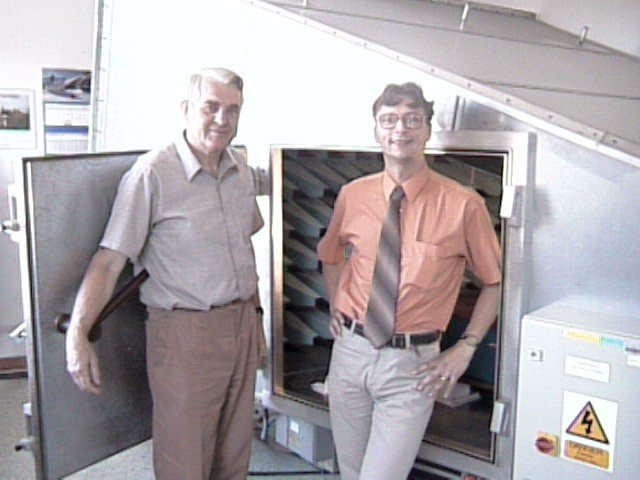
Fig. 1. Józef Wojciechowski and Krzysztof Sieczkarek
Space Odyssey
State-of-the-art apparatus is used to test electromagnetic compatibility in the ILiM laboratory. When measuring electromagnetic field emissions, the tested device (e.g. computer monitor) must be located in a designated area, free from external radio disturbances and not causing reflections of waves emitted by the tested object. Practically speaking, finding such a place is almost impossible, as it would mean conducting tests in an undeveloped, large, and flat space free from the influence of radio stations. The achievements of modern technology have come to help solve this problem. One of the most important and technically interesting measurement stations for electromagnetic compatibility testing is the GTEM chamber (Gigahertz Transverse Electromagnetic Mode Cell). The spatial, metal, triangle-shaped object the size of a “Fiat 126p” looks like it was taken straight out of “2001: A Space Odyssey”. But this very device enables the simulation of measurements performed according to the requirements of most applicable global standards. The GTEM chamber provides all environmental requirements, and additionally – cooperating with a receiver or spectrum analyzer and an IBM PC compatible computer that manages the entire measurement process – eliminates the need to perform numerous manual operations. Its specific construction completely separates the measurement area from the influence of foreign electromagnetic fields. The GTEM chamber located in the Automatic Identification Techniques Laboratory of ILiM, apart from measuring disturbance emissions, constitutes an element of the system for testing the immunity of devices to external electromagnetic fields. This measurement equipment, despite still being a novelty in the world, has been working at ILiM for client services since 1996.
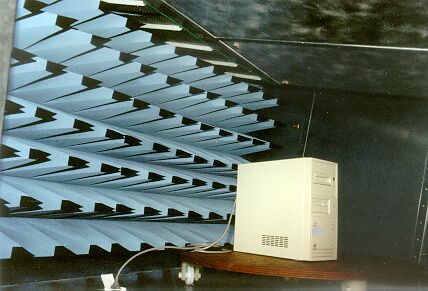
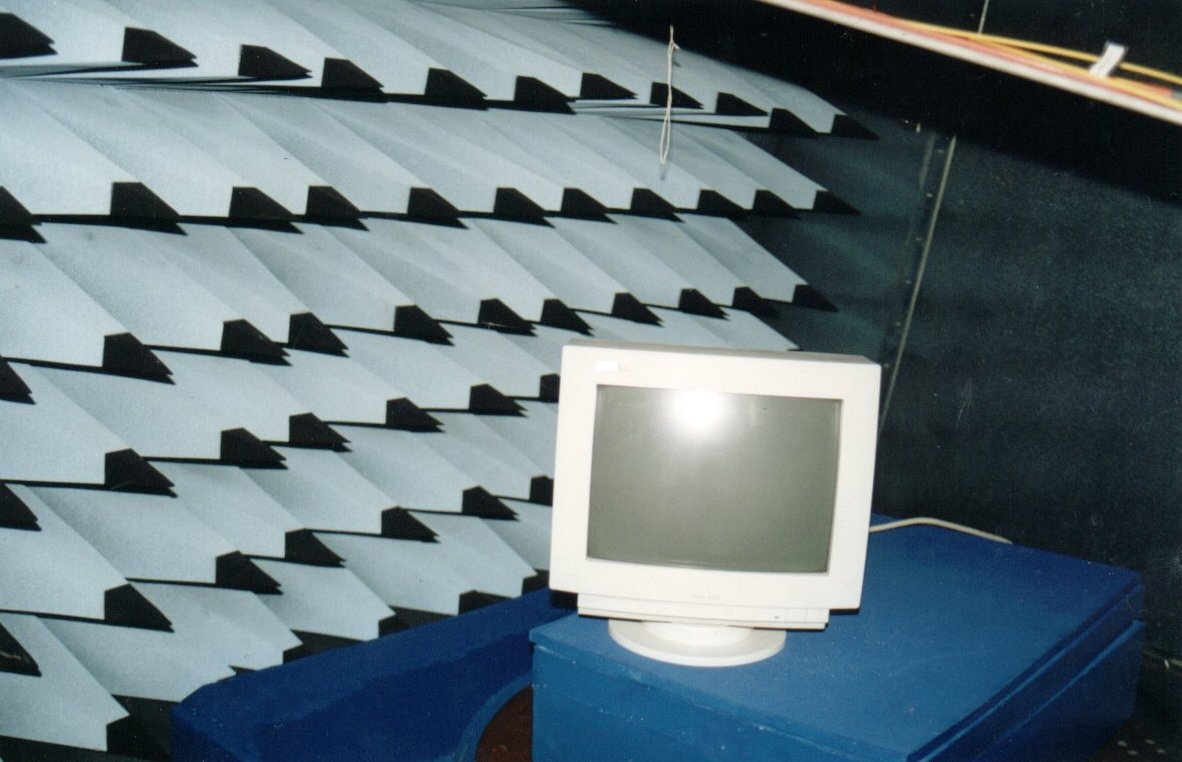
Fig. 2 and 3 Interior of the GTEM chamber and the computer located there undergoing tests.
It must be kept in mind, however, that electromagnetic compatibility tests in residential and industrial environments have significantly more measurement stations. In addition to the aforementioned chamber, these include, among others, a current harmonics meter (measurements up to the fortieth harmonic inclusive), a simulator for testing immunity to storm discharges, testing immunity to cable sparking, introduction of nanosecond “spike” bursts, a simulator of phenomena in power grids (voltage dips and fluctuations, etc.), a station for measuring disturbances generated on cables by the device (“B” mark), and others. The Institute of Logistics and Warehousing helps clients comply with electromagnetic compatibility requirements necessary for the legal labeling of equipment with the CE symbol.
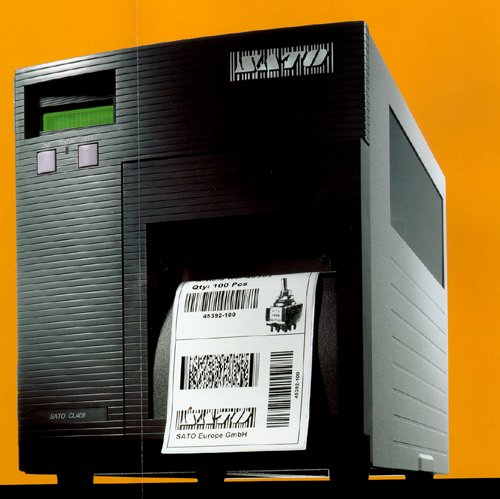
Fig. 4 The CE mark placed on a telephone
Tests carried out in the Automatic Identification Techniques Laboratory are intended to guarantee that equipment intended for operation in a given environment will function reliably. The tests are not obligatory, so it will still be up to the manufacturers themselves and their official representatives to submit this declaration in accordance with the actual technical condition of the devices.
Michał KORALEWSKI